Pride, Democracy, and the Power of Us
In a new reflection for Pride Month, George Thorn, Give Black Alliance Board Clerk and SVP, Sr. Philanthropic Client Manager at Bank of America Private Bank, explores what Black LGBTQ leaders can teach us about democracy, belonging, and collective freedom.
Pride Month arrives this year in the midst of a storm. I have lived long enough to recognize it, and I know what that storm feels like. I will not pretend otherwise.
I am a fifty-something-year-old Black gay man, and I have watched this country extend rights with one hand while taking them away with the other. I have celebrated landmark decisions and mourned their quiet erosion. I have stood in rooms where my full identity was welcomed, and in others where parts of it had to be left at the door.
I consider myself fortunate. But this moment—with its renewed attacks on voting rights, its dismantling of DEI initiatives, and its narrowing of civil rights protections—does not feel abstract to me. It feels familiar in ways that are alarming.
America has always wrestled with a central question: Who counts as fully human in its democracy?
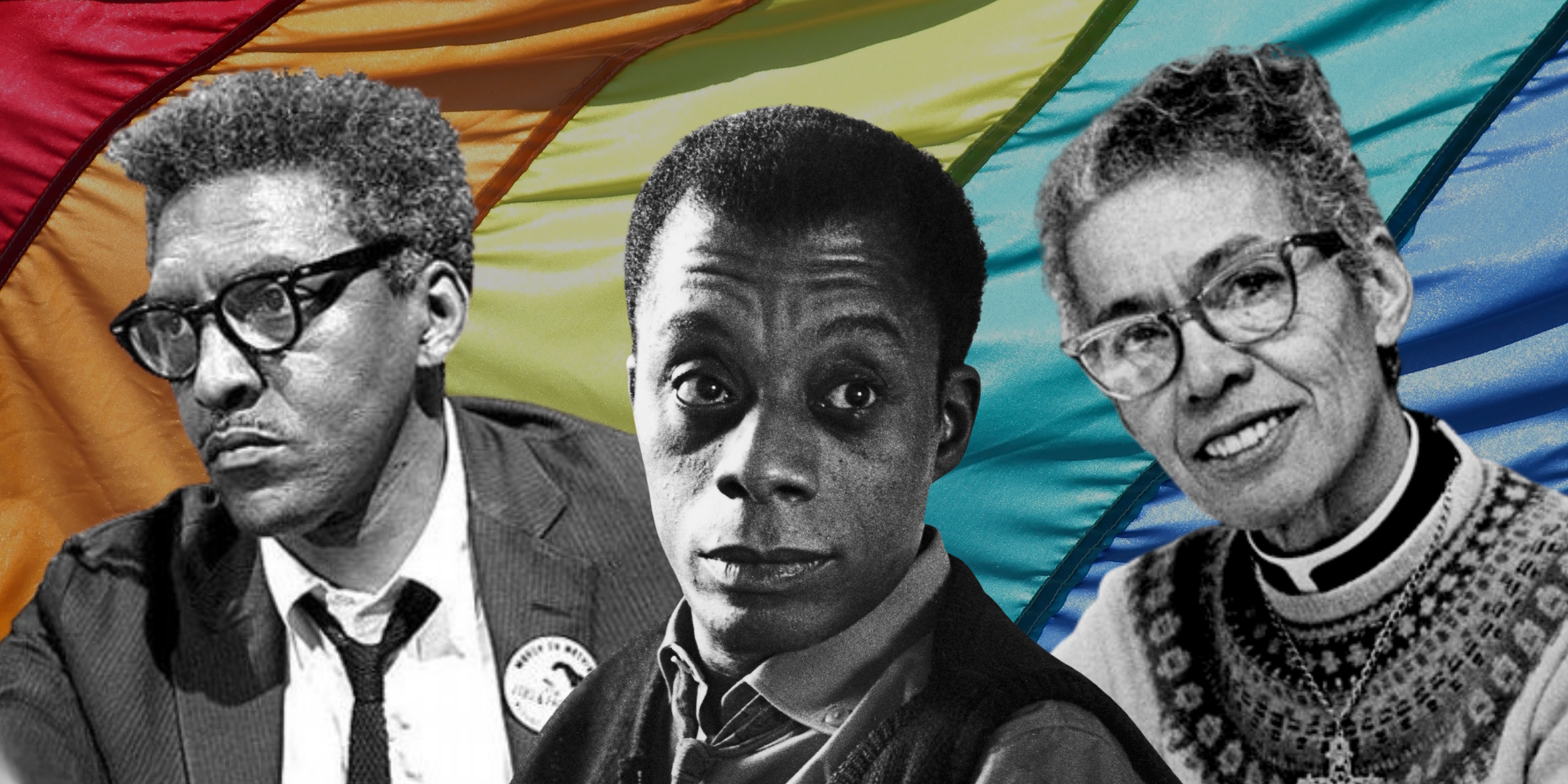
This month, we honor three Black LGBTQ visionaries who spent their lives refusing to let democracy shift toward exclusion. Bayard Rustin, James Baldwin, and Pauli Murray did not offer three separate answers to the question about who counts. They offered one answer from three directions: you cannot separate the fights. Race, sexuality, dignity, citizenship, and democracy are not isolated conversations. They are one.
Rustin understood the answer as coalition. As the chief organizer of the 1963 March on Washington and as a Black gay man pushed to the margins of the movement he helped build, Rustin knew that democracy survives only when people build across lines of difference. He connected civil rights to labor rights, economic justice, and global human rights decades before that thinking had a name. Freedom, he insisted, was not individual survival. It was a shared responsibility.
Baldwin chose truth-telling. Through The Fire Next Time and decades of unflinching witness, he argued that racism was not a regional problem or a Black problem. It was a national crisis rooted in denial. He showed how race, sexuality, masculinity, and power reinforce one another, not as theory, but as lived reality. He warned that nations built on myth eventually lose the capacity for democracy itself. A society that cannot tell the truth about its history cannot sustain the freedom it claims to protect. Reading Baldwin now feels less like scholarship and more like prophecy.
Murray understood the solution as wholeness. A legal scholar, poet, activist, and Episcopal priest, Murray argued—long before mainstream institutions caught up—that oppression is layered, and that democracy fails when it recognizes only partial humanity. Murray's legal thinking helped lay the groundwork for equal protection doctrine and anti-discrimination law. The deeper contribution was philosophical: freedom requires recognizing the complexity of human identity, not forcing people into rigid categories that serve someone else's comfort.
Together, they were saying what Give Black Alliance has been saying all year. In January, we examined how America curates a comfortable memory of Dr. King while discarding his critique of power. In March, we traced how Black women's genius has been edited out of the record. In April, we stood in Boxtown and witnessed a community absorb the cost of someone else's progress without consent. In May, many crossed the Edmund Pettus Bridge and called out the dismantling of voting protections. The throughline is clear: when protections for those furthest from power are weakened, democracy itself weakens. The question of who belongs is never settled. It must be answered, clearly and actively, in every generation.
I have known that truth in my own body for more than fifty years. You cannot separate the fights. The attack on voting rights, the attack on LGBTQ identity, and the attack on racial equity are not separate campaigns. They are the same campaign, aimed at the same question: whose humanity is democracy required to protect? The answer these three gave was unambiguous. All of it. All of us.
This Pride Month, Give Black Alliance honors more than identity. We honor vision. We honor the people who insisted that freedom is collective, dignity is indivisible, and democracy must continually expand its understanding of who belongs.
That work is not finished. It is the work we are doing now, together, in every piece we write, every community we stand with, and every fight we refuse to separate from every other fight.
This is not history. It is the present tense of democracy. That is the power of us. And it is the responsibility we carry forward, together. Not just in reflection, but in action.
We invite you to stand in coalition with us.